Why you bruise more easily during your period
5 sources
pmc.ncbi.nlm.nih.gov
Menstruation and injury occurrence; a four season observational ...
frontiersin.org
Menstruation and injury occurrence; a four season observational ...
pmc.ncbi.nlm.nih.gov
Injury Risk and Overall Well-Being During the Menstrual Cycle in ...
pmc.ncbi.nlm.nih.gov
The Influence of Menstrual Cycle Phases on Postconcussion ... - PMC
onlinelibrary.wiley.com
The Influence of Menstrual Cycle Phases on Postconcussion ...
Listen to this article
Ever notice those mysterious purple marks appearing on your legs during your period and wonder if you're suddenly more fragile? You're not imagining it, and you're definitely not alone.
Here's what's really happening: your hormones are literally changing how your blood vessels behave. When estrogen drops during menstruation, it's like removing a protective shield from your capillaries. Estrogen helps keep blood vessel walls strong and supports your body's clotting mechanisms. Without enough of it, those tiny vessels become more fragile and prone to breaking from minor bumps you might not even remember.
Your body is in healing mode, not breaking mode
The gentle truth is that this increased bruising susceptibility is completely normal. Recent research on female athletes shows that while you might not get injured more often during your period, when tissue damage does occur, it tends to be more severe and takes longer to heal. This is because low estrogen reduces your body's natural repair mechanisms.
Think of it like this: your body is channeling its energy into the important work of your menstrual cycle. Everything else, including maintaining super strong capillaries, takes a backseat for a few days.
Comfort your vessels from the inside out
Supporting your vascular health doesn't require a complete lifestyle overhaul. Focus on soothing, healing nutrients that work with your cycle rather than against it.
Vitamin C rich foods like oranges, bell peppers, and strawberries help strengthen capillary walls. Vitamin K from leafy greens supports proper clotting. And here's a cozy bonus: that warm bone broth you're craving? It's packed with collagen that supports blood vessel integrity.
Your gentle action plan:
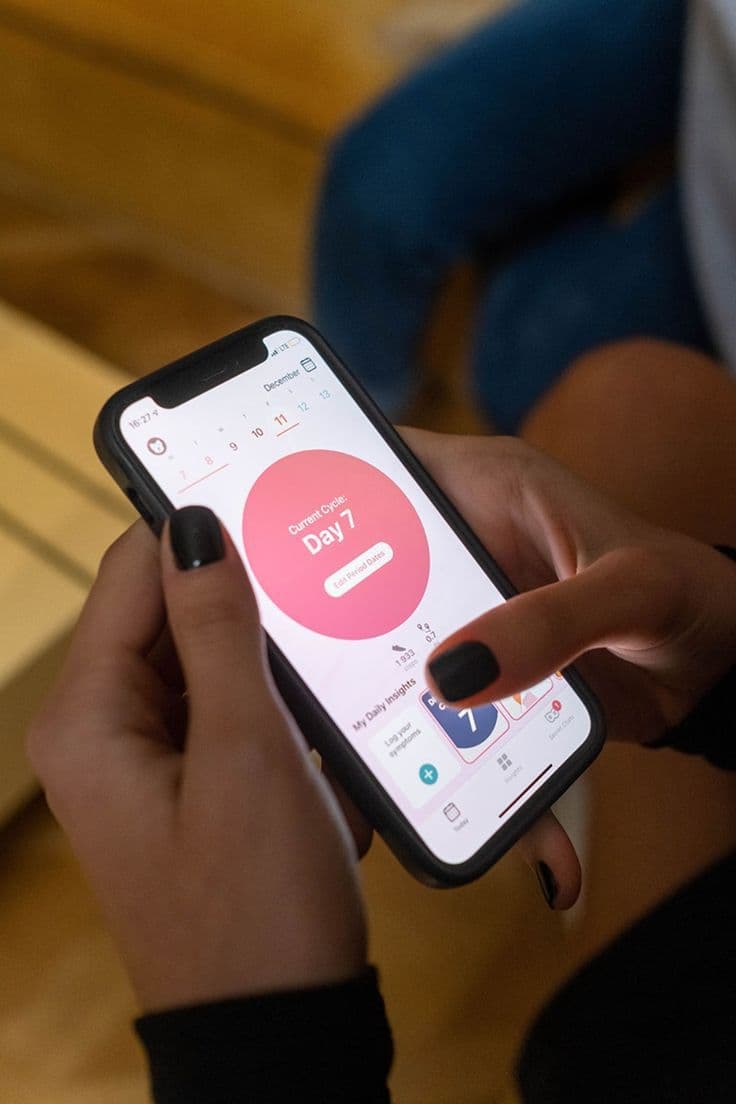
• Track when bruising appears to confirm the pattern matches your cycle
• Add vitamin C and K rich foods during your period week
• Choose rest over high impact activities when you're feeling tender
• Apply cool compresses to fresh bruises for comfort
• See your doctor if bruises appear without any impact or are unusually large
Remember, increased bruising during menstruation is your body's way of asking for a little extra gentleness. Listen to that wisdom and give yourself the soothing care you deserve.